
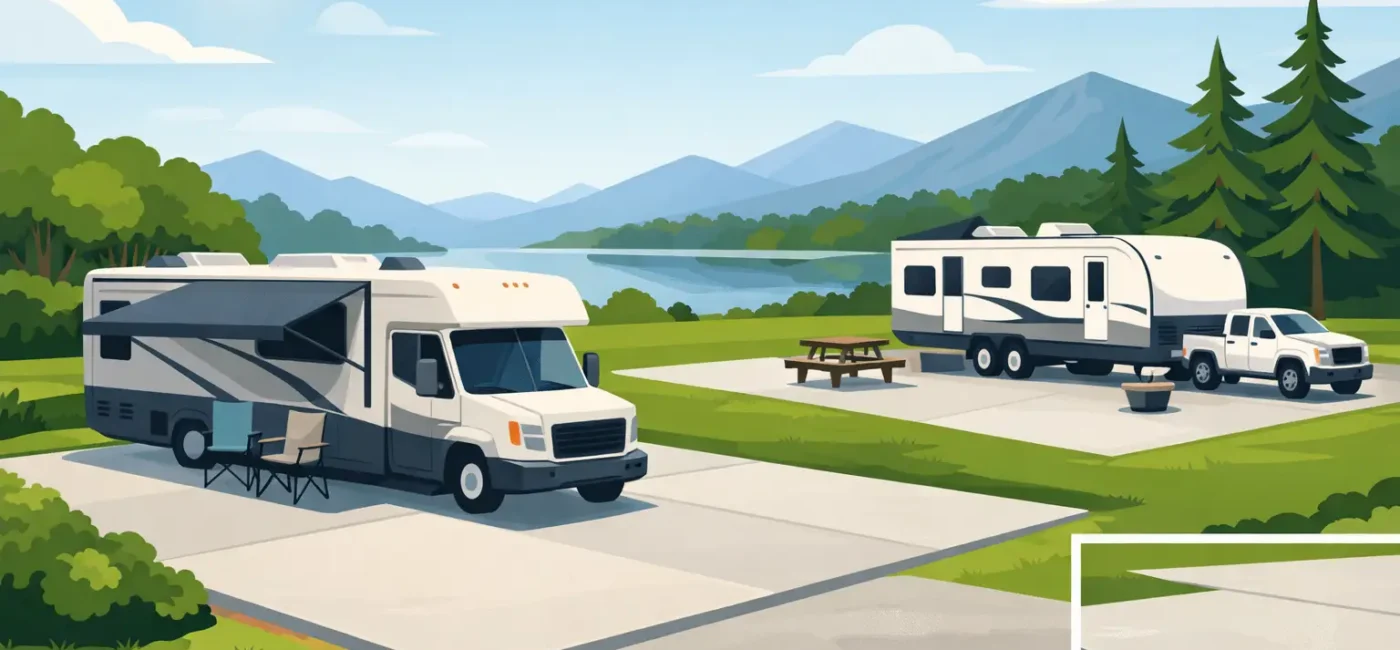
Pulling into a site after a long drive should feel easy, not like the start of another chore list. That is one reason many travelers specifically look for an rv park with concrete pads. A concrete pad can make setup cleaner, leveling simpler, and everyday life around your RV more comfortable, especially when you are staying more than a night or two.
For some guests, concrete pads are a nice extra. For others, they are a deal breaker. If you travel during rainy seasons, stay for weeks at a time, or simply want a more polished and dependable site, the surface under your RV matters more than people sometimes realize.
What makes an rv park with concrete pads different?
At a glance, the difference may seem small. A pad is just the place where you park, right? In practice, the surface affects how your RV sits, how clean your outdoor area stays, and how much daily wear and tear you deal with during your stay.
Concrete pads create a stable, even parking surface that holds up well through changing weather. Compared with gravel or dirt, they are less likely to shift under heavy rigs, less likely to turn muddy after rain, and easier to walk on when you are carrying groceries, setting up camp chairs, or stepping out with pets.
That does not mean every other site type is bad. Gravel can drain well and may work perfectly fine for overnight stops. Dirt sites can feel rustic and natural in the right setting. But if your priorities are convenience, cleanliness, and a more residential feel, concrete usually comes out ahead.
Cleaner stays start at ground level
One of the biggest advantages of an rv park with concrete pads is simple – less mess. Anyone who has tracked mud, dust, or loose gravel into an RV knows how quickly a small cleanup issue becomes an everyday annoyance.
Concrete gives you a firmer, cleaner surface around your entry steps and outdoor area. After rain, you are less likely to be dealing with puddles at your door. In dry conditions, you are not kicking up as much dirt. That can make a real difference for families, pet owners, and long-term guests who want their site to feel comfortable instead of constantly needing attention.
This is especially valuable if your RV is acting as more than a weekend getaway. For extended stays, small quality-of-life details matter. The easier it is to keep your space tidy, the more at home you tend to feel.
Why pet owners notice the difference
Dogs do not care what kind of pad you book, but their paws do. Concrete pads usually mean less mud and less loose material getting carried back inside. If you walk your dog several times a day, that cleaner transition between outdoors and indoors can save time and frustration.
For guests traveling with pets, a well-kept site surface supports the kind of easy daily routine that makes a park more livable.
Leveling is often easier and more predictable
Every RV guest wants a site that makes setup straightforward. While exact leveling still depends on the specific site and your rig, concrete pads often provide a more consistent starting point than rougher surfaces.
That matters when you are parking a larger motorhome, fifth wheel, or travel trailer. A stable pad can reduce some of the uncertainty that comes with backing in, placing supports, and getting settled. If you arrive tired, late, or in bad weather, that smoother setup process feels even more valuable.
There is a trade-off here. Concrete is unforgiving if a site is not built well, and a poorly designed pad will not magically fix slope issues. Good park layout and site maintenance still matter. But when the pad is properly installed, it supports a more dependable arrival experience.
Concrete pads can feel better for longer stays
Not every RV guest is passing through for one night. Many people stay for weeks or months while relocating, working temporary jobs, visiting family, or taking time to explore a city. In those cases, the park starts to function more like a neighborhood than a campground.
That is where concrete pads really shine. They tend to support a neater, more organized site appearance. Your steps feel steadier, your outdoor chairs sit better, and your day-to-day movement around the RV is easier. The whole site can feel more comfortable and intentional.
For long-term residents, that practical comfort adds up. You are not just parking. You are living there for a while.
Weather matters more than most people expect
A site can look fine on a sunny afternoon and feel very different after a storm. Rain is often where the value of concrete becomes obvious.
On softer surfaces, water can create muddy spots, ruts, and uneven footing. Gravel handles some conditions well, but it can still shift or scatter. Concrete generally stays more predictable. You can step out, hook up, and move around your site with more confidence.
In a place like Tulsa, where weather can change quickly, dependable site infrastructure is not just about appearance. It is part of having a stay that feels easy instead of disruptive.
A better fit for full-hookup convenience
Guests choosing full-hookup sites usually want simplicity. They want to arrive, connect, and settle in without fighting the site itself. Concrete pads pair well with that expectation because they support a cleaner, more finished setup experience.
If a park also offers strong utilities, easy access, onsite management, and clean shared amenities, the overall stay starts to feel much more comfortable than a basic roadside stop.
Is an rv park with concrete pads always the best choice?
Usually, it depends on what kind of trip you are planning. If you are looking for a rustic camping feel, you may prefer a different style of park altogether. If you only need a quick overnight stop and price is the only factor, a basic gravel site may do the job.
But many RV travelers are not just chasing the lowest nightly rate. They are looking for value. They want a site that protects their time, keeps things cleaner, and helps them settle in without extra hassle. In that context, concrete pads are often worth prioritizing.
This is especially true for bigger rigs, longer stays, travelers with pets, and anyone who appreciates a park that feels well maintained from the moment they pull in.
What to look for besides the pad itself
A concrete pad is a strong feature, but it should not be the only thing you consider. The best stay comes from how the whole property works together.
Look at whether the sites are spacious, whether hookups are reliable, and whether the park feels safe and professionally managed. Check for the details that shape everyday comfort, like clean showers, laundry access, WiFi, and a layout that makes it easy to get in and out. If you are staying longer, gated access, onsite staff, and a peaceful atmosphere matter even more.
This is where a park can move from acceptable to genuinely welcoming. A solid pad gives you a strong foundation. Good hospitality is what turns that site into a place where you can relax and recharge.
For guests staying in Tulsa, a park that combines concrete pads with full hookups, secure access, and a comfortable community feel offers a practical advantage. Big Tree RV Park is built around exactly that kind of stay – clean, dependable, and easy for both short visits and longer-term living.
Comfort is not a luxury when you travel by RV
People sometimes talk about RV travel as if every inconvenience is just part of the adventure. Some flexibility does come with the lifestyle, but that does not mean you should settle for a site that makes daily life harder than it needs to be.
A well-designed RV park helps reduce friction. You should not have to think twice about stepping outside after rain, keeping your entry clean, or getting leveled when you arrive. Those things affect your experience right away, and they continue to matter every day you stay.
That is why concrete pads stand out. They are not flashy, but they improve the basics in ways RV guests feel immediately.
If you are comparing places for your next stop, pay attention to the ground beneath your rig. The right site surface can make your stay cleaner, calmer, and far more comfortable from day one.