
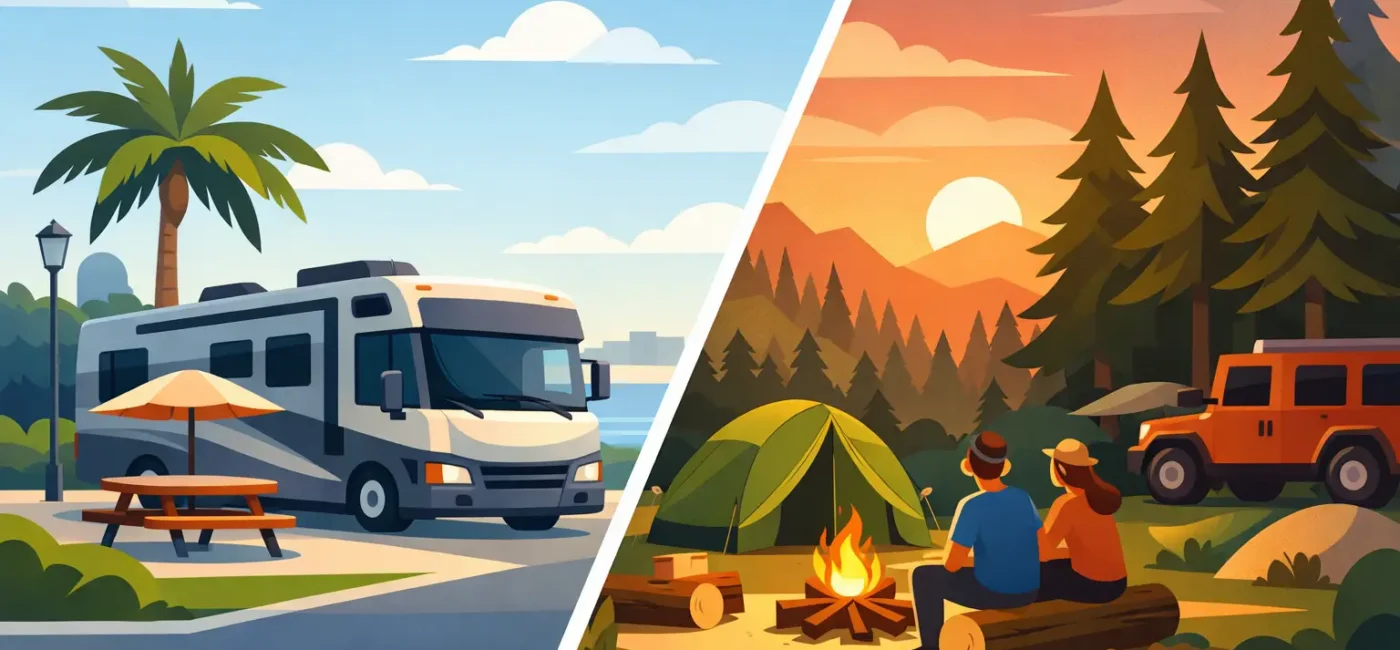
Pulling in after a long day on the road, the difference between a smooth check-in and a stressful night often comes down to one question: rv park versus campground. They can look similar on a map, but the experience can be very different once you arrive, level your rig, and settle in.
If you are planning a quick overnight stop, a family getaway, or a longer stay near town, it helps to know what each option usually offers. The right choice depends on how you travel, what kind of setup you need, and how much comfort you want when the day is done.
RV park versus campground: the basic difference
In most cases, an RV park is built with RV travelers in mind first. That usually means dedicated RV sites, utility hookups, easier access for larger rigs, and amenities designed to make setup simple. You are more likely to find full hookups, reliable electric service, laundry, showers, WiFi, and a layout that works well for motorhomes, fifth wheels, and travel trailers.
A campground is often broader in purpose. It may serve tent campers, pop-up campers, cabins, and RVs all in the same property. Some campgrounds have excellent RV sites, but many lean more rustic. You might get water and electric only, partial hookups, or no hookups at all. Roads and pads can also be less predictable, especially in older or more nature-focused locations.
That does not mean one is better in every situation. It means the experience is different. If your priority is convenience, comfort, and utility access, an RV park usually has the edge. If your priority is a more traditional outdoor camping feel, a campground may be exactly what you want.
What to expect from an RV park
An RV park is usually the easier choice when you want a stay that feels organized and dependable. For many travelers, that matters most when arriving late, staying several days, or traveling with family, pets, or work commitments.
Sites are often designed for easier parking and leveling. Full hookups are much more common, which means water, sewer, and electric are available right at your site. For guests with larger coaches or people who do not want to deal with extra setup steps, this can make a big difference.
Amenities are another key part of the RV park experience. Clean restrooms, showers, laundry rooms, WiFi, onsite management, and secure access are all features many RV travelers actively look for. These details may not sound exciting when you are booking, but they matter a lot after a few nights on the road.
RV parks also tend to work better for extended stays. If you are in town for work, relocating, visiting family, or staying a month or more, a park environment often feels more practical. You get more of the basics you need for everyday living, not just a place to sleep.
What to expect from a campground
Campgrounds often offer a more traditional outdoor setting. That can mean wooded spaces, more distance between sites, hiking access, fire rings, picnic tables, and a quieter, more unplugged atmosphere. For weekend trips and vacation-style camping, that appeal is real.
If you enjoy campfires, early mornings outdoors, and a setting that feels closer to nature, a campground may be the better fit. Many people prefer that experience for short leisure trips, especially when they do not need full services at their site.
The trade-off is that campgrounds can be less convenient for RV-specific needs. Hookups may be limited. Site sizes may vary a lot. Some campgrounds are very accommodating to smaller trailers but less comfortable for big rigs. Others may have older infrastructure, uneven pads, or tighter roads that require more patience during arrival and departure.
For some travelers, none of that is a problem. For others, especially those looking for easy setup and reliable daily comfort, it can become frustrating fast.
The biggest factors when choosing between them
The choice between an RV park and a campground usually comes down to how you define a good stay.
If you want full hookups, easy utility access, and a site that supports everyday comfort, an RV park will usually be the safer bet. If you are fine with fewer conveniences and want more of a classic camping atmosphere, a campground may feel more rewarding.
Length of stay matters too. For one or two nights, you may be happy with almost anything that is clean and safe. For a week, a month, or longer, details like laundry, showers, strong electric service, WiFi, and onsite staff become much more important.
Location can also shape the decision. Campgrounds are often farther from town, attractions, restaurants, and major roads. RV parks are more likely to be near the places travelers actually need to reach, which is helpful if you are balancing travel with errands, work, appointments, or events.
RV park versus campground for long-term stays
This is where the gap becomes clearer. A campground may work for a weekend or even a short vacation, but long-term RV living usually calls for more structure and support.
Extended-stay guests often need dependable power, clean facilities, regular maintenance, and a place that feels stable and secure. They may also want features that support real day-to-day life, like laundry, mail options, storage, pet-friendly policies, and management that is easy to reach.
An RV park is typically better set up for that kind of stay. The environment is often more consistent, and the property is usually designed around people who are not just passing through. That matters whether you are a traveling professional, a seasonal visitor, or someone between homes.
For guests looking at monthly rates or stays of 60 days or more, the question is not just where to park. It is where you can feel comfortable, settled, and taken care of.
Comfort, safety, and ease matter more than people think
Many RV travelers start by comparing rates, and that makes sense. But the nightly price is only part of the decision.
A lower-cost campground can become less appealing if you have to deal with weak hookups, difficult parking, limited services, or a layout that does not suit your rig. On the other hand, a well-run RV park may cost a little more but save time, reduce stress, and make the overall stay much better.
Safety is another factor people should not ignore. Gated access, onsite management, well-lit areas, and a clean, organized property create more peace of mind, especially for solo travelers, retirees, families, and long-term guests. You may not put that at the top of your list at first, but once you experience the difference, it tends to stay there.
Comfort matters just as much. After driving, setting up, and handling the small tasks that come with RV travel, most people want a place where they can relax and recharge without extra hassle.
Which option is right for you?
If your ideal trip includes hiking boots, a fire ring, and fewer distractions, a campground may be exactly right. If your ideal stay includes full hookups, clean facilities, reliable access, and a smooth arrival, an RV park is probably the better fit.
For many travelers, the answer changes from trip to trip. A rustic campground might be perfect for a vacation weekend in the woods. A full-service RV park makes more sense when you are stopping in a city, staying near local attractions, or settling in for more than a few days.
That is why asking the right questions before you book matters. What hookups are available? How large are the sites? Is the park easy for your rig to enter and exit? Are showers, laundry, and WiFi included? Is the property quiet, clean, and professionally managed? Those answers tell you much more than the label alone.
In a place like Tulsa, where travelers may want both convenience and a comfortable home base, an RV park often strikes the right balance. A property like Big Tree RV Park is designed for guests who want more than a parking spot. They want a clean, secure, welcoming place to stay close to town, with the features that make travel easier and longer stays more comfortable.
The best choice is the one that fits the way you actually travel, not the way a listing sounds online. When your site is easy to pull into, your hookups work, and you can relax at the end of the day, you know you picked well.