
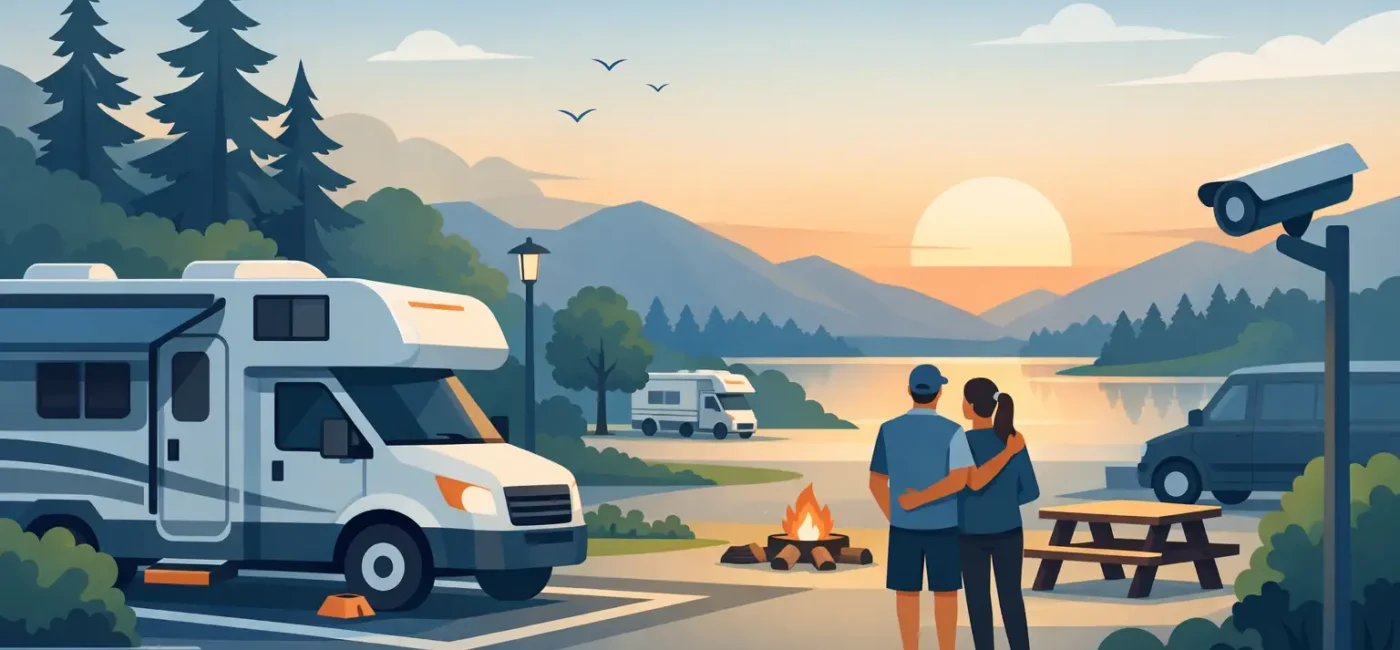
Pulling in after dark with a tired driver, a restless dog, and a rig that still needs leveling is not the time to guess. If you are wondering how to find safe RV parking, the best answer is to look beyond price and vacancy and pay close attention to the details that tell you whether a place is well run, well lit, and built for a comfortable stay.
A safe RV stop is not always the cheapest one or the closest one to the highway. Sometimes the best choice is the park that feels a little more organized, has someone onsite, and makes setup easy so you can settle in without stress. That matters whether you are staying one night, one week, or much longer.
How to find safe RV parking before you arrive
The safest parking decisions usually happen before your wheels hit the entrance. A little research can save you from a rough night, a bad fit for your rig, or a place that looks nothing like the photos.
Start with the basics. Check whether the property clearly lists site types, hookup options, amp service, and any access details for larger rigs. A park that explains how it operates is usually easier to trust than one that leaves you guessing. Clear information suggests clear management.
Guest reviews help, but they are most useful when you read them with a filter. Look for repeated comments about security, quiet hours, lighting, cleanliness, and staff responsiveness. One cranky review is not always meaningful. A pattern of complaints about poor access, broken gates, or unattended issues is.
Photos matter too, especially the unglamorous ones. Wide roads, defined sites, maintained grounds, working lights, and visible common areas tell you more about safety than a perfectly staged sunset photo. If a park shows practical details, it usually understands what guests care about.
What safe RV parking really looks like
Safety in an RV park is part security and part predictability. You want to know how the place functions when you arrive late, head out early, walk the dog, or stay long enough to settle into a routine.
Look for controlled access
A gated property is not the only sign of a safe stay, but it is a strong one. Controlled entry helps limit random traffic and gives guests more confidence about who is coming and going. For longer stays, that extra layer of structure can make a big difference.
That said, a gate alone is not enough. If the gate is broken half the time or there is no clear check-in process, it loses value fast. Security works best when it is part of an organized operation, not just a feature on a flyer.
Onsite management makes a difference
One of the most underrated signs of a safe RV park is visible management. When staff are present and engaged, problems get handled faster and expectations stay clear. Guests tend to respect the property more when they know someone is paying attention.
This is especially important for travelers arriving after a long drive or staying for several weeks. If you need help with your site, have a question about utilities, or want to report a concern, onsite management brings peace of mind that an unattended lot simply cannot.
Lighting should be practical, not harsh
Good lighting helps with both safety and convenience. You should be able to see roads, hookups, walkways, bathhouses, and pet-walking areas without feeling like you are parked under a stadium light.
A well-lit property also tends to feel more cared for. When owners invest in practical lighting, maintained grounds, and clean shared spaces, it often reflects a broader commitment to guest comfort and security.
The parking spot itself matters
Even a decent park can have a site that is not ideal for your setup. Safe RV parking is not just about the property. It is also about whether your specific space supports an easy, stable stay.
Check for level pads, enough room for slide-outs, and clear maneuvering space. Tight turns and cramped sites raise stress quickly, especially for larger motorhomes, fifth wheels, and trailers. A spacious site with a concrete pad or solid surface can make setup safer and far less frustrating.
Hookups should be easy to reach and clearly maintained. If power, water, and sewer connections look neglected, treat that as a warning sign. Utility issues are not just inconvenient. They can create avoidable problems during your stay.
How to spot a park that fits your kind of trip
The right RV parking choice depends on why you are traveling. An overnight stop and a three-month stay require different priorities, even though safety matters in both cases.
If you are passing through, focus on easy access, dependable lighting, straightforward check-in, and a quiet environment where you can rest. You do not need every extra amenity, but you do want a place that feels orderly and calm.
If you are staying longer, look deeper. Laundry, showers, reliable WiFi, pet-friendly policies, and a sense of community become much more important when the park is part of your daily life. Long-term guests also benefit from parks that balance privacy with a well-managed atmosphere.
That is where a full-service park often stands out from improvised parking options. A professionally run property can offer the comfort of home while still keeping things simple for travelers.
Red flags to take seriously
Sometimes a place is technically available but still not a smart choice. A few warning signs are worth paying attention to, even if you are in a hurry.
Be cautious if a park has vague pricing, poor communication, or no clear policies. Confusion at the booking stage often turns into frustration after arrival. The same goes for sites with very recent negative reviews about safety, noise, or management that never responds.
If photos show clutter, damaged infrastructure, poor drainage, or vehicles packed in without clear spacing, trust your instincts. Safe parking should feel intentional. If the property looks improvised, your stay may feel that way too.
You should also think twice about parking options that do not provide basic support for RV living. A low rate can lose its appeal quickly if you end up dealing with unstable footing, difficult hookups, or an environment where you do not feel comfortable stepping outside after dark.
Why amenities support safety too
People often separate safety from comfort, but the two go together more than you might think. Clean showers, maintained laundry rooms, dependable hookups, and tidy grounds all suggest consistent oversight.
The same is true for shared spaces. A park with a welcoming patio, pet areas, or community gathering spots usually signals that guests are expected to enjoy the property, not just squeeze into it. That kind of atmosphere can help a place feel more secure and more livable.
For many travelers, especially families, retirees, and working professionals on assignment, peace of mind comes from knowing the park is built for real stays, not just quick turnover. A place can be convenient and still feel comfortable.
A practical way to compare your options
When you are choosing between two or three parks, keep your checklist simple. Ask yourself whether the property has controlled access, visible management, good lighting, well-kept sites, and the utilities you need. Then consider the feel of the place. Is it quiet, organized, and easy to understand?
If one option is slightly farther from your route but offers a more secure and comfortable environment, it is often worth it. Saving ten minutes on the road does not help much if the stop leaves you tense all night.
Travelers looking in the Tulsa area often prioritize that same mix of security, comfort, and convenience. A park like Big Tree RV Park appeals to guests for exactly that reason – full hookups, spacious sites, gated access, onsite management, and a setting that feels peaceful without putting you far from the city.
When safe RV parking is worth paying more for
Budget always matters, and many RV travelers are watching costs carefully. Still, the lowest nightly rate is not always the best value. If paying a little more gets you secure access, cleaner facilities, better site design, and responsive staff, you are often buying a smoother trip, not just a parking space.
That trade-off becomes even clearer on longer stays. Reliable power, clean common areas, and a property that feels managed can make the difference between simply getting through a stay and actually enjoying it.
The best RV parking does not just give you a place to stop. It gives you a place to exhale, settle in, and feel at home for however long you need to stay.