
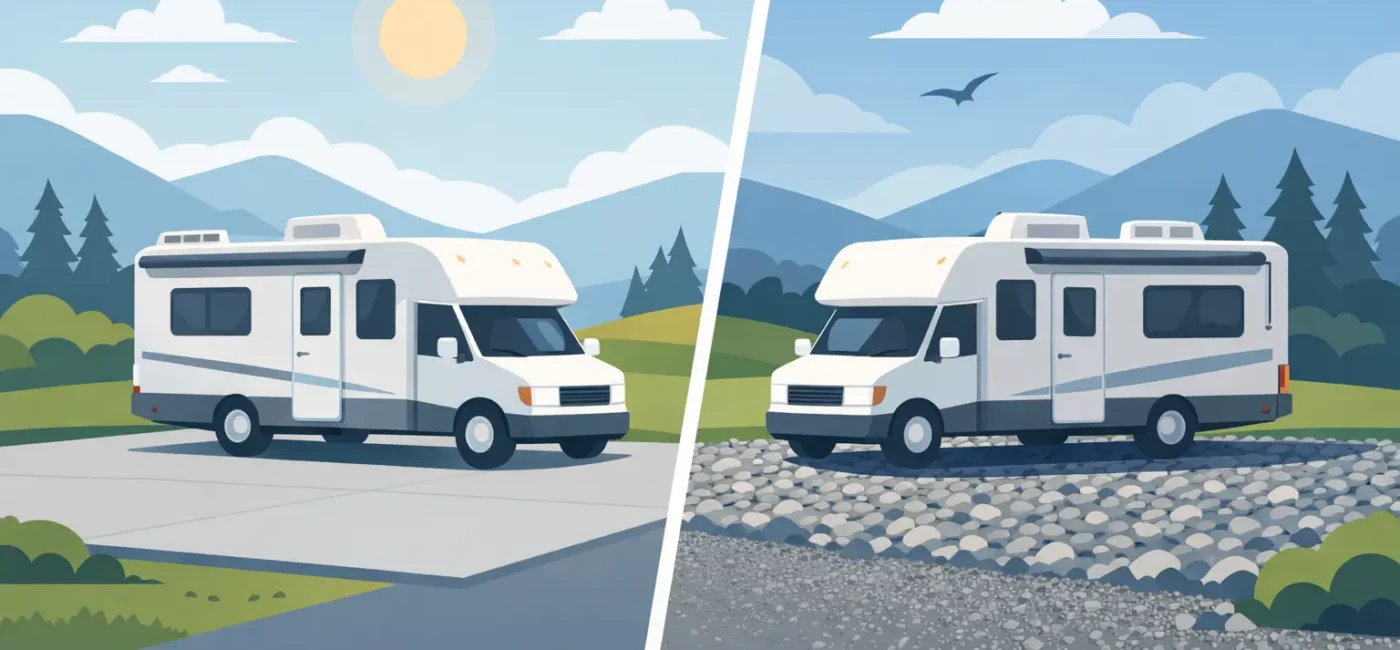
Pulling into a site after a long drive, the last thing most RV guests want is to step out into mud, shifting rock, or a setup area that never quite feels level. That is why concrete RV pads versus gravel is more than a construction question. It directly affects comfort, cleanup, stability, and how easy your stay feels from the moment you park.
For overnight travelers, that difference shows up fast. For long-term guests, it becomes part of everyday life. If you are comparing site types for your next stay or thinking about what makes one RV park feel more comfortable than another, it helps to understand where concrete shines, where gravel still makes sense, and why the right answer depends on how you travel.
Concrete RV pads versus gravel at a glance
Concrete and gravel both have a place in the RV world, but they create very different guest experiences. Gravel is usually the lower-cost option upfront and can work well in rural or lightly developed settings. Concrete costs more to install, yet it tends to deliver a cleaner, more stable, and more predictable surface over time.
That difference matters when you are backing in after dark, leveling a larger rig, unloading kids or pets, or staying long enough that a site starts to feel like home. A pad is not just where the RV sits. It is the foundation for your setup, your outdoor space, and your day-to-day routine.
Why surface choice matters more than people expect
Many guests do not think much about the ground under their RV until they have a bad experience. Maybe the gravel shifts under the jacks. Maybe rain leaves puddles and mud around the entry step. Maybe tiny stones get tracked inside for days. None of these issues ruin a trip on their own, but they add friction.
A well-built concrete pad removes a lot of that friction. It gives you a firm, even parking area. It is easier to walk on, easier to sweep off, and generally easier to live with. For guests who are relocating, working in town, or staying for weeks or months, that extra ease can make a real difference.
Comfort and cleanliness
This is where concrete usually pulls ahead quickly. A concrete pad feels solid underfoot, especially when you are carrying groceries, rolling a cooler, or stepping out early in the morning. After rain, it does not turn into a mix of wet dirt and loose stone. It also helps keep shoes, pet paws, and RV interiors cleaner.
Gravel has its own practical side. It can reduce standing water if it is installed well, and some travelers do not mind the look or feel. But gravel can scatter, develop ruts, and migrate into walkways or grassy areas. Over time, that can make a site feel less tidy and less settled.
For many guests, especially families, retirees, and extended-stay residents, cleanliness is not a small perk. It is part of what makes an RV park feel cared for.
Leveling, stability, and setup ease
A level site can save time and frustration. Concrete pads are typically more consistent, which makes parking and leveling simpler. That matters for larger motorhomes, fifth wheels, and travel trailers that need a stable base. It also helps with steps, outdoor chairs, grills, and anything else you set up around the site.
Gravel can work fine when it is graded and maintained properly, but it is more likely to shift under weight. Heavy rigs, repeated use, and weather can create uneven areas over time. That may mean more effort during setup and more minor adjustments during a stay.
If you travel often, you already know how valuable a smooth arrival can be. The less time spent correcting the site, the more time you have to relax and settle in.
Drainage and weather performance
This is one area where the answer is not always as simple as concrete is better. Drainage depends on the full site design, not just the top layer. A properly sloped concrete pad can move water away effectively and stay usable after storms. A poorly designed concrete surface can leave water pooling in the wrong places.
Gravel is naturally permeable, which can be an advantage. Water can pass through rather than sitting on top. Still, gravel sites can become messy in heavy rain if the base is not built correctly or if surrounding soil washes into the stone.
In Oklahoma, where weather can change quickly, site design matters a lot. A good RV park does not just choose a surface. It builds the pad, drainage, and surrounding area to work together. That is part of why some concrete sites feel dramatically better than others.
Long-term wear and maintenance
From an ownership perspective, gravel is often easier and cheaper to install, but it typically needs more ongoing touch-up. Stones move. Low spots form. New gravel gets added. After enough traffic, maintenance becomes part of keeping the site functional and presentable.
Concrete is more expensive at the beginning, yet it generally offers better long-term consistency. It does not need to be replenished the way gravel does, and it tends to hold its shape under regular use. When maintained well, it supports a cleaner, more polished appearance across the property.
For guests, that maintenance picture translates into something simple: does the site still feel solid and comfortable after months or years of use? Concrete often answers that question more reliably.
Concrete RV pads versus gravel for short stays
If you are staying one night while passing through, gravel may be perfectly acceptable. Plenty of travelers prioritize location, hookups, and price over surface type for a brief stop. If the site is level enough and the weather is dry, gravel can do the job just fine.
But even on a short stay, concrete can make arrival and departure easier. It is simpler to walk around the rig, easier to keep clean, and more convenient if you are setting up late or leaving early. For road trippers who want fewer hassles, that convenience is worth noticing.
Concrete RV pads versus gravel for extended stays
The longer you stay, the more concrete tends to earn its value. Extended-stay guests are not just parking. They are living. They are walking in and out daily, receiving deliveries, taking pets outside, setting up chairs, and building routines.
On gravel, small annoyances can pile up. Dust in dry conditions, mud in wet conditions, shifting underfoot, and ongoing cleanup all become part of daily life. On concrete, the site usually feels more settled and residential. That can make a park feel more welcoming, especially for working professionals, seasonal guests, or anyone using an RV as temporary housing.
This is one reason many guests looking for comfort and simplicity prefer parks with concrete pads and well-maintained infrastructure. At Big Tree RV Park, that focus on clean, dependable sites is part of creating a stay that feels easy from day one.
Cost versus value
If you are building a site, gravel usually wins on upfront cost. That makes it attractive for basic campgrounds, overflow areas, or properties with tighter budgets. But upfront cost is only part of the picture.
Concrete often delivers more value over time through lower routine maintenance, stronger guest appeal, and a better overall experience. For RV parks aiming to attract repeat travelers and long-term residents, that higher standard can support stronger occupancy and better guest satisfaction.
From the guest side, the question is a little different. You are not choosing which material to install. You are deciding what kind of stay you want. If a concrete site helps you stay cleaner, level faster, and feel more comfortable, it may be worth paying a little more for that peace of mind.
Which one is right for you?
If you are a flexible traveler making a quick overnight stop, gravel may meet your needs without much downside. If you are traveling with pets, staying through rainy weather, driving a larger rig, or planning a longer visit, concrete becomes a lot more appealing.
It also depends on what kind of RV park experience you want. Some guests are happy with a simple place to hook up and sleep. Others want something more comfortable, secure, and polished, with a site that feels easy to use every day. Neither approach is wrong, but they are not the same.
A good rule of thumb is this: if site comfort matters to you once you are parked, not just while you are driving, concrete is usually the stronger choice.
When you are comparing RV parks, do not just look at rates and hookups. Look at the surface you will actually be living on. The best site is the one that lets you pull in, settle down, and feel at home without fighting the ground beneath your feet.