
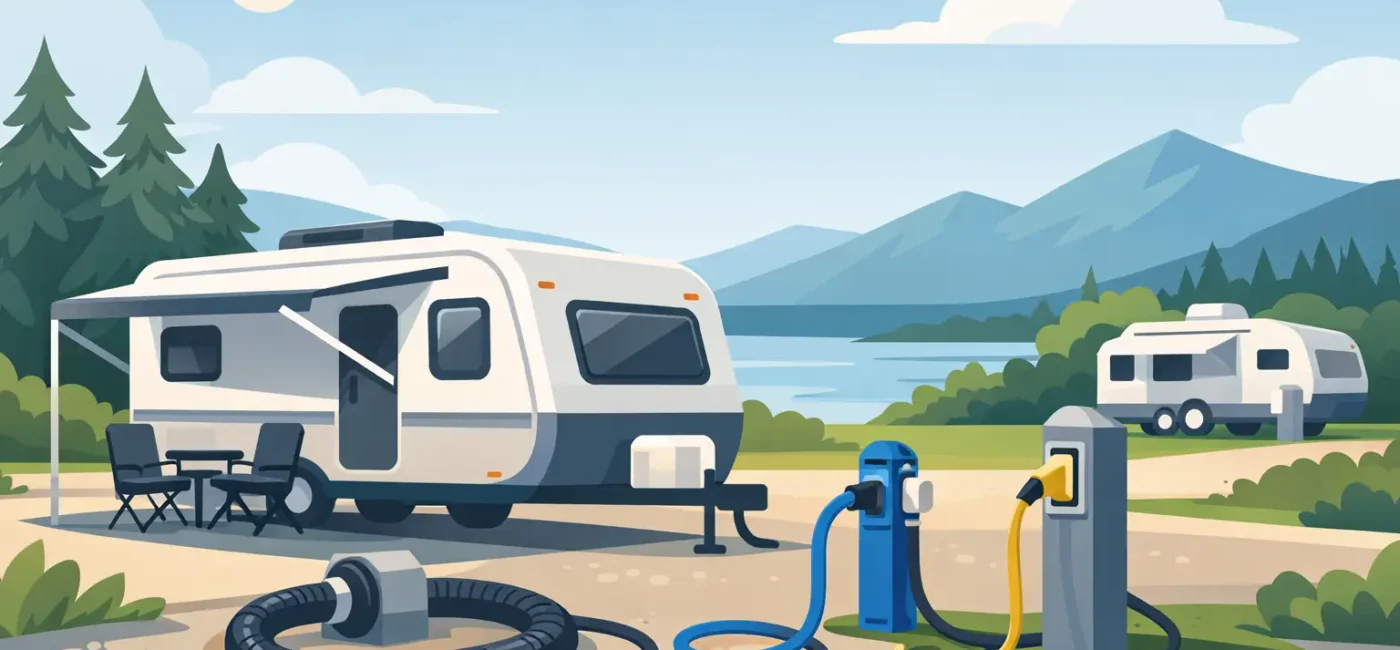
Pulling into your site after a long drive should feel easy, not stressful. If you have ever paused at the pedestal wondering which connection comes first, this guide to RV park hookups will help you get set up with more confidence, fewer mistakes, and a lot less second-guessing.
For many guests, hookups are the difference between a quick overnight stop and a comfortable stay that actually feels like home. When water, sewer, and electric are connected the right way, your RV works the way it is supposed to. Showers are simpler, air conditioning runs properly, and daily routines feel normal whether you are staying one night or settling in for a longer visit.
What RV park hookups usually include
Most full-service RV parks provide three core connections at each site: electric, water, and sewer. Some parks also offer cable, WiFi, or other extras, but the main hookups are what keep your coach functional day to day.
Electric service is usually the first thing travelers notice because the pedestal is visible as soon as you park. Depending on your RV, you may connect to 20, 30, or 50 amp service. Water gives you pressurized fresh water for sinks, showers, and toilets, while sewer allows wastewater to flow out of your holding tanks safely and cleanly.
Not every site is identical, and that is where experience helps. Some parks offer only partial hookups, while others provide full hookups with multiple electric options at the same site. If you are booking ahead, it is always smart to confirm what is included so you arrive knowing exactly what your RV can support.
Guide to RV park hookups: the right setup order
There is more than one routine that works, but a dependable setup order makes things smoother. Once you are parked, leveled, and secured, connect your electric, then water, then sewer. That order lets you power up your systems first, check your water pressure next, and handle sewer with a little more care instead of rushing through it.
Start by turning the breaker off at the pedestal before plugging in your shore power cord. This small step helps protect your RV’s electrical system. Once you are connected, flip the breaker on and check that your appliances and surge protector, if you use one, are reading correctly.
Next, connect your fresh water hose. A pressure regulator is a good idea at many parks because water pressure can vary from site to site. After turning the water on slowly, check inside and outside your RV for any leaks before you move on.
Sewer comes last. Connect the hose securely at both ends and make sure the fittings are tight. If you are staying more than a night or two, keep your black tank valve closed until the tank has enough waste to drain properly. Leaving it open all the time can lead to clogs and the mess no one wants to deal with.
Understanding electric hookups without the confusion
Electric service sounds technical until you break it down. A 30 amp connection is common for many travel trailers and smaller motorhomes. A 50 amp connection is usually needed for larger rigs with multiple air conditioners or heavier power demands. A 20 amp outlet may be available for light use or smaller setups, but it is not a substitute for matching your RV’s actual requirements.
The trade-off is simple. More available amperage means more appliances can run at once, but only if your RV is built for it. Adapters can help when the park’s pedestal does not match your plug exactly, though adapting down may limit what you can safely use. If you plug a large rig into lower service, you may need to avoid running the microwave, air conditioner, and other heavy loads at the same time.
This is why checking your RV’s power needs before arrival matters. It saves frustration and helps you choose the right site from the start.
Common electrical mistakes to avoid
The biggest mistake is plugging in with the breaker already on. Another common one is assuming every outlet is interchangeable. They are not. Use the correct cord, a quality adapter if needed, and a surge protector if you want an extra layer of protection.
If power cuts out after setup, do not panic. First check the pedestal breaker, then your RV’s internal breakers. Sometimes the issue is simply too many appliances running at once rather than a park problem.
Water hookups that keep things clean and simple
Fresh water should always be treated like, well, fresh water. Use a hose made for potable water rather than a standard garden hose, and store it separately from your sewer equipment. It sounds basic, but keeping those items apart is one of the easiest ways to maintain a cleaner setup.
A water pressure regulator helps protect your plumbing from pressure spikes. In some parks, water pressure is lower and everything works fine without much adjustment. In others, pressure can be strong enough to stress fittings or lines. That is an it-depends situation, but a regulator is inexpensive peace of mind.
Some travelers prefer to fill their fresh water tank and use the RV pump, especially for short stays or when they want more control over pressure. Others stay connected to city water the whole time. Either approach can work. The best choice depends on your rig, your comfort level, and how long you plan to stay.
Sewer hookups without the rookie mistakes
Sewer is the hookup new RVers worry about most, and fair enough. The good news is that it becomes routine quickly when you follow a few clean habits.
Make sure the hose has a secure connection at the sewer inlet and the RV outlet before opening anything. If your site has a threaded sewer connection, use it. It gives a tighter fit and reduces the chance of movement while draining.
For short stays, many guests wait to dump tanks until they are leaving. For longer stays at a full-hookup site, the usual approach is to keep the gray valve closed too, then dump black first and gray second. The gray water helps rinse the hose after the black tank empties.
A sewer hose support can help maintain proper downhill flow, especially on longer site runs. Is it always required? No. But if the hookup is far from your outlet or the ground slopes awkwardly, it can make the whole process cleaner and more reliable.
What to check before you book
A good guide to RV park hookups is not only about connecting once you arrive. It is also about asking the right questions before you reserve your site.
Confirm the available amp service, whether the site includes full hookups, and how the site is laid out. Site length matters if you are towing or traveling in a larger motorhome. Pad quality matters too, especially if you want easier leveling and a more stable setup.
If you are planning an extended stay, ask about practical comforts beyond hookups. Clean showers, laundry, strong WiFi, secure access, and onsite management make a bigger difference than many travelers expect. The hookup itself gets you connected, but the overall park experience is what makes a stay feel comfortable week after week.
At a well-kept park like Big Tree RV Park, that combination of full hookups, clean amenities, and a secure setting can take a lot of stress out of both short visits and longer stays.
A few setup habits that make every stay easier
The easiest arrivals usually come down to preparation. Keep your electric adapters, fresh water hose, sewer hose, gloves, regulator, and any needed fittings in one dedicated storage area so you are not digging through compartments after dark.
It also helps to do a quick walkaround before and after hookup. Look at hose connections, check for drips, confirm the power is stable, and make sure your sewer line is positioned well. That two-minute check can save you from a much bigger headache later.
If you are new to RV travel, give yourself extra time the first few stays. There is no prize for the fastest setup. A calm, careful routine is usually the one that keeps your equipment in better shape and makes your trip more enjoyable.
When hookups feel different from park to park
Even experienced travelers notice that every park has its own rhythm. One location may have easy-to-reach utilities on a level concrete pad. Another may require a little more hose length or a different parking position. That is normal.
The goal is not to memorize one perfect formula for every campground. It is to understand the basics well enough that you can adapt. Once you know how your RV handles electric load, water pressure, and tank dumping, hookups stop feeling intimidating and start feeling like part of the road routine.
A comfortable RV stay starts with simple things done well. When your site is set up safely and your connections are working the way they should, it is a lot easier to relax, settle in, and enjoy where you parked for the night.