
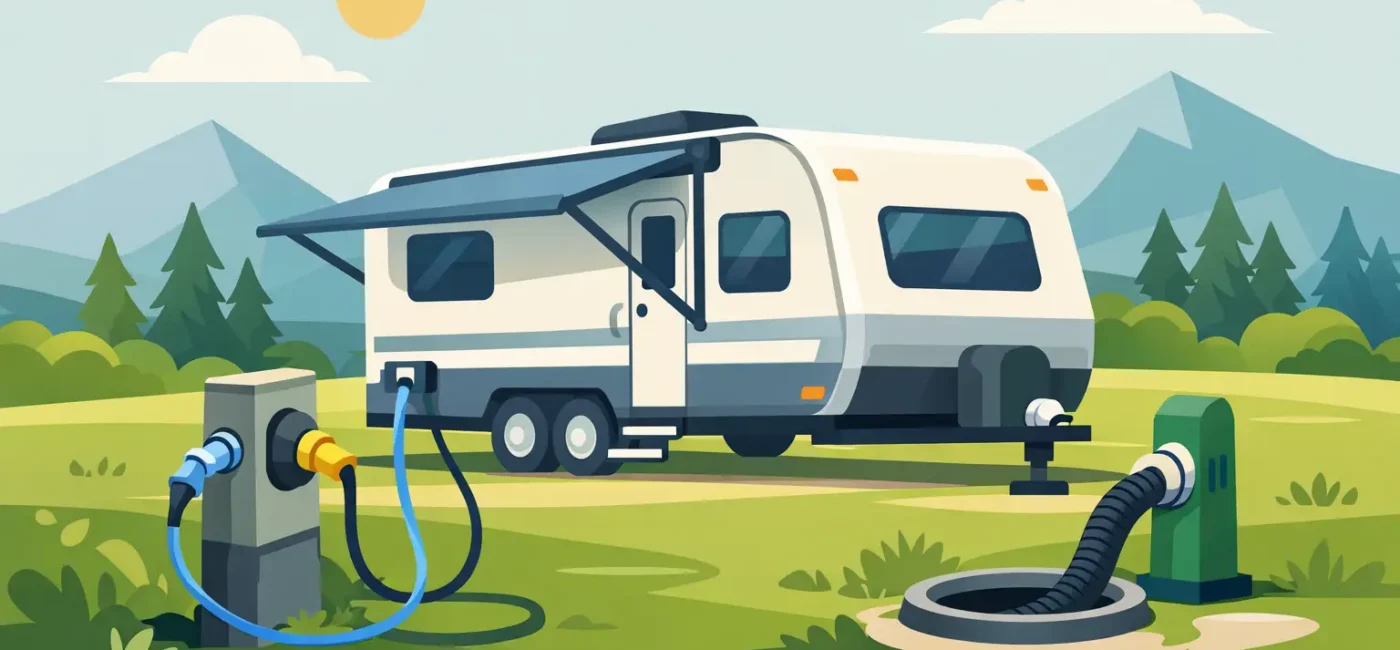
Pulling into a new site should feel like the easy part of the trip, not the moment you start second-guessing cords, hoses, and breakers. If you are learning how to set up RV hookups, a simple routine makes all the difference. A good setup keeps your RV comfortable, protects your equipment, and helps you settle in faster so you can actually enjoy where you parked.
Some hookups are straightforward, and some depend on the site, your rig, and how long you plan to stay. A one-night stop might call for a lighter setup than a monthly stay. Either way, the safest approach is to follow the same order every time so nothing gets missed.
How to Set Up RV Hookups Step by Step
The best setup order is level first, then connect utilities. That keeps your fridge operating properly, helps tanks drain as intended, and prevents you from having to disconnect everything just to reposition the coach.
When you arrive at the site, pause before you start plugging anything in. Check where the power pedestal sits, where the water spigot is, and where the sewer inlet is located. That quick look tells you how to position your RV so your connections reach comfortably without stretching cords or hoses too tight.
Start by parking and leveling
Back into the site slowly and leave yourself enough room for slide-outs, steps, and any patio space you want to use. If the site is concrete or otherwise improved, use that to your advantage and center the rig where your utilities line up naturally.
Once parked, level the RV from side to side and then front to back, depending on your type of rig. Chock the wheels before you unhook a towable. This is the part people want to rush through, but it matters. A level RV helps appliances work better and makes everyday living inside much more comfortable.
Connect electric second, but carefully
Before plugging in, make sure the breaker at the pedestal is off. That reduces the chance of arcing when you connect your power cord. Then confirm whether your RV needs 30 amp or 50 amp service, and use the correct plug and adapter if one is required.
If you use a surge protector or EMS, connect that before your RV cord. It is one of the smartest pieces of protection you can have, especially when you are staying somewhere unfamiliar. Park power is usually reliable, but power issues do happen, and a protector can save you from costly damage.
After everything is firmly connected, switch the breaker on and check your interior systems. Your air conditioner, microwave, outlets, and converter should all be functioning normally. If something seems off, shut the breaker back down and recheck the connection before assuming there is a bigger problem.
Hook up fresh water with pressure in mind
Your next step is water. Most RVers use a potable water hose, a water pressure regulator, and often a filter. Attach the regulator at the spigot if possible, then connect your hose and run the other end to your city water inlet.
Turn the water on slowly and check for leaks at both ends. A slow start gives you time to catch a loose fitting before it sprays everywhere. If your RV has an onboard water tank, remember that city water and tank fill are not the same setting on many rigs. Double-check your valves so you do not accidentally overfill the tank.
Pressure is where a lot of new owners get into trouble. Too little pressure is annoying, but too much can damage plumbing. That is why a regulator is worth using even when the park has good infrastructure.
Set up the sewer connection last
Sewer is usually the least glamorous part of RVing, but it does not need to be complicated. Connect your sewer hose firmly to the RV outlet and then to the site sewer inlet. If the park requires a threaded or sealed connection, make sure it is properly secured.
Keep both your gray and black tank valves closed at first if you are staying more than a night or two. That gives the tanks time to build enough volume for a better dump. Leaving the black tank open all the time can lead to solids drying out and creating the kind of mess no one wants to deal with.
If you are only staying briefly and need to use the system lightly, your approach may be different. But for most stays, closed valves and periodic dumping are the cleaner, safer routine. When it is time to dump, empty the black tank first and the gray tank second to help rinse the hose.
The Gear That Makes RV Hookups Easier
You do not need a giant pile of accessories, but a few basics make setup smoother and safer. A surge protector, potable water hose, pressure regulator, sewer hose support, wheel chocks, leveling blocks, and disposable gloves cover the essentials for most travelers.
There is some personal preference involved here. Full-timers often carry backup hoses, extra fittings, and extension cords because they see a wider range of site layouts. Weekend travelers may keep a lighter kit. The key is not owning everything. It is having the right basics ready before you need them.
A small flashlight also earns its place more often than people expect. Late arrivals, shaded sites, and early morning departures are all easier when you can clearly see your connections.
Common Mistakes When Setting Up RV Hookups
The most common mistake is setting up in the wrong order. People connect water and sewer, then realize they need to move six inches to level the coach. Starting with position and leveling saves time and frustration.
Another issue is plugging into shore power without checking the breaker or the service type. A 30 amp rig and a 50 amp pedestal are not automatically a problem if you have the right adapter, but guessing is never a great plan. Know your coach and use the proper equipment.
Sewer mistakes usually come down to loose connections or poor valve habits. If a hose is not fully seated, you will know it at the worst possible moment. And if the black tank valve stays open for a long stay, you risk buildup that is far harder to fix than prevent.
Water problems tend to come from skipped pressure regulators or worn washers in hose fittings. A small drip may seem harmless, but over time it creates muddy sites, wasted water, and one more thing to troubleshoot.
How Different Stays Change Your Setup
Not every stop calls for the exact same routine. If you are overnighting and leaving early, you might skip the sewer hookup unless you know you will need it. Many travelers prefer to keep things simple for a quick stop and only connect power and water.
For a weekly or monthly stay, full hookup setup usually makes the most sense. You will want comfortable access to utilities, room to relax outside, and a setup that feels tidy and dependable. That is where a well-maintained site really matters. Spacious pads, clearly placed hookups, and reliable utility service can turn setup from a chore into a five-minute routine.
Longer stays also bring comfort into the picture. Once the basics are done, many guests add small touches that make the site feel more like home, such as a mat, chairs, or outdoor lighting. At a well-run park like Big Tree RV Park, that extra comfort matters because guests are not just passing through. Many are staying long enough to want security, convenience, and a place that feels settled.
A Few Safety Habits Worth Keeping
Good RV setup is really about habits. Keep cords and hoses organized so they do not become trip hazards. Do not force fittings that are cross-threaded or damaged. If a pedestal looks worn, a spigot leaks badly, or a sewer inlet seems questionable, ask park management before you improvise.
It also helps to do a quick walkaround once everything is connected. Make sure slides clear obstacles, steps are stable, valves are in the right position, and nothing is pinched under the rig. Those sixty seconds can save you a lot of trouble later.
If you are new to RV travel, give yourself extra time on arrival days. Setup gets easier quickly, and after a few stays, the process starts to feel second nature. The goal is not speed for its own sake. The goal is to arrive, get comfortable, and know your RV is connected the right way.
A calm, consistent routine is the real secret behind knowing how to set up RV hookups. Once you have that down, every arrival feels easier, and every stay starts with a little more peace of mind.