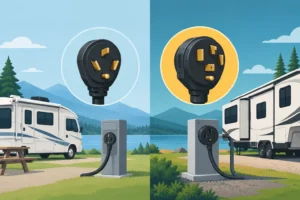
You have backed onto a level site, connected water and sewer, and are ready to relax. Before you plug in, one question matters more than it may seem: 30 amp versus 50 amp – which service does your RV need? Using the right connection protects your electrical system and helps you enjoy the comforts that make an RV stay feel like home.
The short answer is simple: use the electrical service your RV was built to use. A 30-amp RV uses a 30-amp pedestal outlet, while a 50-amp RV uses a 50-amp outlet. The bigger difference is how much power each service can safely provide, especially when the weather calls for air conditioning, electric heat, or both.
30 Amp Versus 50 Amp: The Main Difference
A 30-amp RV connection supplies up to 30 amps of power at 120 volts. That gives you about 3,600 watts to share among everything running in your coach. The plug has three prongs, and it is designed specifically for RV use.
A 50-amp RV connection is more capable than the number alone suggests. It has four prongs and provides two separate 120-volt hot legs. Each leg can deliver up to 50 amps, for a total available capacity of up to 12,000 watts. In practical terms, a 50-amp RV can run far more equipment at the same time.
That does not mean a 50-amp rig uses more electricity automatically. It simply has more room for demand. Your actual usage depends on what you turn on, how long you use it, and the condition of your RV’s appliances.
What Can a 30-Amp RV Run?
Thirty-amp service is common in smaller travel trailers, pop-up campers, older motorhomes, and many modest-size fifth wheels. It can comfortably support everyday essentials, but it asks you to manage high-draw appliances with a little care.
In many 30-amp RVs, you can run one air conditioner along with the refrigerator, lights, television, and battery charger. The challenge begins when you add another heavy appliance. A microwave, hair dryer, toaster, coffee maker, portable heater, or electric water heater can push the load beyond what the breaker can handle.
For example, if your air conditioner is running on a hot Tulsa afternoon, it is wise to turn it off briefly before using the microwave or hair dryer. This is not a sign that your RV site has poor power. It is simply the normal limit of a 30-amp electrical system.
A tripped breaker is usually your RV’s way of preventing an overload. Resetting it once after reducing the load is generally straightforward. If it trips repeatedly, do not keep resetting it. Turn off appliances, inspect your cord and connections for heat or damage, and contact park management or a qualified RV technician if the issue continues.
What Can a 50-Amp RV Run?
Fifty-amp service is common in larger fifth wheels, Class A motorhomes, destination trailers, and newer RVs built with more residential-style features. It is especially helpful for rigs with two or three air conditioners.
With 50 amps, you can usually operate multiple air conditioners while still using the microwave, refrigerator, electronics, and other daily conveniences. You still need to use common sense. A loose cord, damaged adapter, weak campground pedestal, or an issue inside the RV can cause trouble regardless of the service size.
The key benefit is comfort during high-demand periods. On a warm summer day, a 50-amp coach can keep more of the RV cool without requiring you to carefully schedule every appliance. For long-term guests, families, and travelers who work from the road, that extra capacity can make daily life much easier.
Why 50 Amp Is Not Just “20 More Amps”
This is the most common point of confusion. A 50-amp RV service is not only 20 amps more powerful than a 30-amp service. Because it uses two 120-volt legs, it can provide more than three times the total power of 30-amp service.
That difference matters when comparing RVs, planning for summer travel, or deciding which amenities you can run at once. It also explains why a 50-amp coach should not be connected to a 30-amp outlet without understanding the limitations.
Can You Use an Adapter?
Yes, adapters can be useful, but they do not increase available power. A 50-amp RV can connect to a 30-amp pedestal with the proper adapter, often called a dogbone adapter. However, the RV is still limited to 30 amps of incoming power.
That means you will need to manage your appliances as if you were in a 30-amp RV. Run one air conditioner if your system allows it, avoid stacking heavy loads, and pay attention to your energy management system if your coach has one.
A 30-amp RV can also connect to a 50-amp pedestal using the correct adapter. In that case, the RV’s own 30-amp main breaker continues to limit how much power it draws. The larger pedestal outlet does not force excess electricity into your RV.
Never try to alter plugs, use makeshift wiring, or force a connection that does not fit. RV electrical equipment is designed to work safely when the correct cords, adapters, and breakers are used. If a plug feels loose, shows discoloration, or gets unusually hot, stop using it and report the issue.
How to Choose the Right RV Site Connection
Start with your RV owner’s manual or the label near your shore-power cord. Your RV may have a 30-amp cord, a 50-amp cord, or a detachable cord with a clearly marked rating. Do not choose based on the size of the RV alone. Some compact coaches have 50-amp service, while some larger older units may still use 30 amps.
When you arrive at your site, inspect the pedestal before connecting. Look for a secure outlet cover, no visible damage, and a firm-fitting receptacle. Turn the pedestal breaker off before plugging in, connect your surge protector if you use one, plug in the RV cord, and then turn the breaker on. This simple routine helps reduce arcing at the connection.
A quality RV surge protector or electrical management system is a smart addition for either service type. It can alert you to problems such as low voltage, high voltage, open grounds, or reversed polarity before those conditions reach your RV. It is not a replacement for safe habits, but it adds valuable peace of mind.
Managing Power During Hot or Cold Weather
Air conditioning is often the biggest electrical demand in an RV. During a humid Oklahoma summer, a 30-amp guest may need to choose between running the A/C and using another high-watt appliance for a few minutes. Closing blinds, parking in shade when possible, and keeping A/C filters clean can reduce the strain.
Cold weather has its own demands. Electric space heaters can draw a surprising amount of power, often around 1,500 watts each. On 30 amps, using one heater alongside a microwave or water heater may trip the breaker. On 50 amps, there is more flexibility, but heaters should still be used carefully, kept clear of fabrics, and plugged directly into appropriate outlets.
Your refrigerator may run on electricity, propane, or an automatic setting depending on the model. If you are trying to reduce electrical demand on a 30-amp connection, knowing how your appliances are configured can make a real difference.
A Comfortable Stay Starts With the Right Setup
Reliable hookups should make your arrival easier, not give you another problem to solve. At Big Tree RV Park, sites offer 50/30/20-amp electric service so guests can connect the way their RV was designed to operate. Whether you are staying overnight, settling in for work, or enjoying an extended Tulsa visit, matching your rig to the right power source helps keep your setup safe and comfortable.
Before your next arrival, take a moment to check your RV’s electrical rating, pack the proper adapter if needed, and plan around your biggest power users. Then you can spend less time watching breakers and more time relaxing under the trees.