A reservation can look perfect on a map and still create a stressful arrival. Maybe the site cannot accommodate your rig, the electric service does not match your needs, or the nightly rate leaves out fees that matter on a longer stay. Asking the top questions before booking an RV park helps you trade surprises for a smoother setup, a better night’s sleep, and more time to enjoy where you are.
For travelers coming through Tulsa, those questions are especially useful. You may be looking for a quick, convenient overnight stop near the airport or downtown attractions, or you may need a comfortable home base for weeks or months. The right park can serve both needs, but the details make the difference.
1. Will My RV Fit the Site?
Start with the practical information your reservation depends on: your RV’s length, the number of slide-outs, and whether you are towing a vehicle or trailer. Ask for the site dimensions and whether there is enough room to park, level, and comfortably open your slides. A site that fits the RV itself may not leave enough space for a tow vehicle, outdoor chairs, or a pet area.
It is also wise to ask about the surface. Concrete pads can make setup easier and provide a clean, stable place to step out of your coach. Gravel sites may work well for many guests, but conditions can be different after heavy rain or during a longer stay. If easy mobility is a priority, ask whether the pad and surrounding paths work for your needs.
2. What Hookups and Electric Service Are Available?
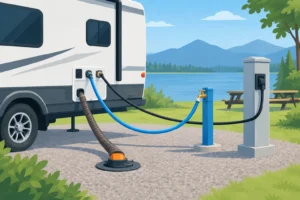
“Full hookups” should mean water, sewer, and electric service at your site, but it is worth confirming rather than assuming. Ask whether the park offers the amperage your RV requires – 50, 30, or 20 AMP – and whether utility connections are conveniently placed for your rig.
For an overnight visit, this may be a simple compatibility check. For a monthly stay, utility details are much more significant. Find out how electric usage is handled, whether any utility costs are included in the rate, and whether there are seasonal considerations. A dependable hookup setup is not glamorous, but it is one of the biggest contributors to a comfortable RV stay.
3. How Easy Is It to Arrive and Set Up?
Arrival should feel welcoming, not like a tight-turn obstacle course after a long drive. Ask about check-in hours, late-arrival procedures, gate access, and the route into the park. If you are arriving after dark, clear instructions can save a lot of frustration.
Also ask whether staff are available onsite. Onsite management gives guests a helpful point of contact when they have a question about their site, need assistance with park procedures, or simply want local suggestions. It also supports the organized, cared-for atmosphere many travelers want when they pull in for the night.
4. What Does the Total Rate Include?
The advertised site rate is only one part of the picture. Before confirming, ask about taxes, reservation fees, utility charges, deposits, pet fees, and any additional charges for extra vehicles or visitors. A clear answer lets you compare parks fairly and plan your travel budget with confidence.
For weekly and monthly guests, ask whether the rate changes by season, how payment schedules work, and what notice is required if your plans change. Long-term pricing can offer excellent value, but it may come with different terms than a short vacation stay. Knowing those terms early prevents confusion later.
5. How Safe and Secure Will I Feel?
Security is a practical concern, particularly for guests who are traveling alone, working away from home, or staying for an extended period. Ask whether the park has gated access, how guests enter after hours, and whether management is present onsite. You can also ask about lighting, visitor policies, and how the park handles quiet hours.
No RV park can promise that nothing will ever go wrong, but thoughtful security measures and clear rules make a meaningful difference. A well-managed park tends to feel calmer because guests know what is expected and have a reliable team to contact when concerns arise.
6. Are the Restrooms, Showers, and Laundry Well Kept?
Even guests with fully equipped RVs appreciate clean shared facilities. A working shower house is useful when you have a full house, want to conserve your onboard water, or are dealing with a maintenance issue. Laundry facilities matter even more on a longer stay, when finding a clean, convenient place to wash clothes can simplify your whole week.
Ask whether showers and laundry are available, how access works, and whether the facilities are regularly cleaned and maintained. Guest reviews can be helpful, but a direct question often gives you the most current answer. Clean common areas are a good sign that the park takes the overall guest experience seriously.
7. Is the Location Convenient for My Plans?
A peaceful setting does not have to mean being far from everything. Consider what you need to reach during your stay: grocery stores, restaurants, work sites, medical care, event venues, outdoor recreation, or the airport. A park close to the places on your itinerary can reduce fuel use, save time, and make a short visit feel much less rushed.
For some guests, a quiet, tree-covered property is the priority. For others, fast access to Tulsa’s major roads and attractions matters most. Ideally, you do not have to choose entirely between the two. Look for a location that lets you relax when you return to camp while keeping the city within easy reach.
8. What Is the Pet Policy?
Pet-friendly means different things at different parks. Before you book, ask about breed or size restrictions, leash requirements, the number of pets permitted, pet fees, and designated walking areas. It is also considerate to ask about expectations for cleaning up after pets and keeping noise to a minimum.
Your dog is part of the trip, not an afterthought. A park with room to walk, clear guidelines, and respectful fellow guests can make a major difference in how settled everyone feels. If you are staying longer, ask whether nearby green spaces or walking routes are easy to access as well.
9. What Is the Park Atmosphere Like?
Some RV parks are built mainly for one-night travelers. Others are more residential, with a mix of retirees, workers on temporary assignment, seasonal guests, and families. Neither is automatically better, but the atmosphere should match what you want from the stay.
Ask about quiet hours, community spaces, and the typical length of guest stays. Features such as a patio, BBQ stations, fire pit, or occasional movie nights can create a friendly sense of community without requiring you to be social every evening. If you value privacy, ask how sites are arranged and whether there is enough space to enjoy your own outdoor area.
10. Can the Park Support an Extended Stay?
If you plan to stay 60 days or more, move beyond the basics. Ask about the application process, residency requirements, mail or package procedures, storage options, and site availability for the full length of your stay. Confirm whether you can remain in the same site or may need to move during your reservation.
Extended-stay guests also benefit from amenities that make daily life simpler: reliable WiFi, clean laundry, secure access, and a responsive onsite team. At Big Tree RV Park, spacious full-hookup sites, concrete pads, gated access, and an onsite storage option are designed to help longer-term guests feel comfortable rather than temporary.
11. Is WiFi Reliable Enough for My Needs?
Free WiFi is a welcome amenity, but your needs determine whether it is enough. If you only need to check email and stream casually, most connections may suit you. If you work remotely, attend video meetings, run a business from your RV, or rely on online school, ask about signal strength at the site and whether guests commonly use the connection for work.
Because service can vary by device, weather, and site location, it is smart to keep a backup plan such as a mobile hotspot. The goal is not perfection. It is knowing what to expect before you arrive with a work deadline.
12. What Happens If My Plans Change?
Road trips are not always predictable. Weather, vehicle repairs, family needs, and work schedules can all shift an arrival or departure date. Ask about cancellation terms, early-departure policies, extension availability, and what happens if you need to arrive later than planned.
A clear policy is a sign of dependable hospitality. It gives you room to make decisions without guessing, and it helps the park manage sites fairly for every guest. Keep the reservation confirmation and contact information handy so you can communicate quickly if the road changes your plans.
The best RV stay begins before you turn off the highway. Ask a few direct questions, choose the comforts that matter most to you, and reserve a place where you can pull in, hook up, relax, and feel at home.