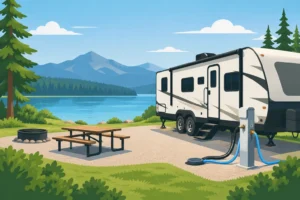
You have made it through a long drive, checked in, and pulled up to your assigned space. Before you put the RV in park, one detail can shape the rest of your stay: the surface beneath your tires. Are RV sites paved? Sometimes, but not always. RV parks use several site surfaces, and each one affects leveling, cleanliness, outdoor living, and how easy your arrival feels.
For an overnight stop, a well-maintained gravel site may be all you need. For a monthly stay, a concrete pad can make daily life feel much more settled. Knowing what to look for helps you choose a site that fits your rig, your travel plans, and your comfort level.
Are RV Sites Paved at Every RV Park?
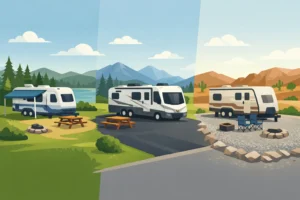
No. RV sites are not paved at every park, campground, or resort. Many parks offer a mix of gravel, asphalt, concrete, grass, or compacted dirt sites. The right choice often depends on the property’s location, weather, style of camping, and the type of guests it serves.
A rustic campground may prioritize a natural setting, with gravel drives and unpaved sites beneath the trees. A destination RV resort may use paved interior roads and concrete pads for a more polished, residential feel. In between are many well-run parks with level gravel sites, defined patios, and reliable utility connections.
The word “paved” can also mean different things to different guests. Some travelers mean a full concrete slab beneath the RV. Others simply want a firm, level space that will not turn muddy after rain. When comparing parks, it helps to ask specifically whether the site has a concrete pad, asphalt pad, gravel base, or another surface.
Common RV Site Surfaces and What They Mean
Concrete pads
Concrete pads are a favorite for guests who value a clean, stable setup. They offer a smooth, durable place to park and are especially helpful for longer stays, larger motorhomes, fifth wheels, and travel trailers. A concrete pad makes it easier to place stabilizers, walk around the RV after rain, and keep less dirt from being tracked inside.
They also make outdoor time more enjoyable. Setting out chairs, a grill, a pet bowl, or a small outdoor rug feels simpler on a solid, even surface. For guests working remotely, traveling with family, or staying for several weeks, these everyday comforts add up quickly.
Concrete does have one consideration: it can retain heat during hot Oklahoma summers. A shaded site, a patio area, and good airflow can make a meaningful difference. That is why a tree-covered setting can be just as valuable as the pad itself.
Asphalt pads
Asphalt is another paved option commonly found in RV parks. It provides a firm parking surface and generally offers good traction, drainage, and durability. Asphalt may be used for a full site, a parking lane, or park roads leading to individual spaces.
For most RV travelers, asphalt offers many of the same practical benefits as concrete. It is clean, stable, and easy to navigate. During periods of extreme heat, however, fresh or softer asphalt can be more vulnerable to heavy loads, so guests should follow park guidance about stabilizer pads or jack blocks.
Gravel sites
Gravel is one of the most common RV site surfaces, especially in parks designed for a mix of short-term and long-term travelers. A properly built gravel site can be very dependable. The key is not whether it is gravel, but whether it has a compacted base, good drainage, enough width, and a level parking area.
Gravel drains well, which can be a real advantage during rain. It also gives parks flexibility to maintain and improve sites over time. Still, it can mean more dust in dry weather and more small stones around entry steps. Bringing a door mat and a small set of leveling blocks is smart for nearly any gravel stay.
A level, well-kept gravel site with full hookups may be far more comfortable than a poorly designed paved site. Surface matters, but maintenance matters just as much.
Grass and dirt sites
Grass and dirt sites tend to appear at seasonal campgrounds, event grounds, and more rustic properties. They can be pleasant in fair weather and blend naturally with the surroundings, but they require more attention from RV guests.
After a heavy rain, soil can become soft or muddy. Grass may hide uneven ground, and dirt sites can create dust during dry, windy days. These sites are often better suited to tent campers, smaller rigs, or travelers who are comfortable with a more traditional camping experience. If your RV is heavy or you are arriving during wet weather, ask about ground conditions before you pull in.
Why a Paved RV Site Can Make a Difference
Paved sites are not only about appearance. They support a smoother stay from arrival to departure. A stable pad can reduce the time spent adjusting your RV, provide a more predictable surface for steps and stabilizers, and help keep your living space cleaner.
For longer-term guests, the benefits are even more noticeable. When your RV is home for a month, a season, or longer, you want to feel comfortable stepping outside with coffee in the morning or taking the dog out at night. A defined, well-maintained site creates a sense of order and privacy that can make extended-stay RV living easier.
A paved pad may also be useful for guests with mobility concerns. While every site and individual need is different, a firm, even surface can make walking and moving gear safer than loose or uneven ground. Guests should still ask about site dimensions, pathways, and accessibility features before booking.
What Matters More Than Pavement Alone
A concrete pad is a strong feature, but it should not be the only factor in your decision. A comfortable RV stay depends on how the entire site works together.
Start with level ground. Even a paved site can require minor leveling, particularly in older parks or locations with natural grade changes. Ask whether the pad is reasonably level and whether the site can accommodate your RV length, slide-outs, tow vehicle, and awnings.
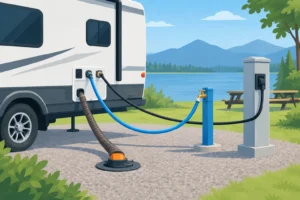
Next, consider hookups. Full hookups with dependable water, sewer, and electric service are often more important than the surface beneath the rig. If you rely on air conditioning, work from your RV, or plan an extended stay, confirming available 50/30/20 AMP electric service is a practical step.
Drainage deserves attention, too. A paved surface should direct water away from your RV rather than creating puddles at the door or around utility connections. Well-designed sites pair a solid surface with thoughtful grading, clear access roads, and room to move safely.
Finally, look at the atmosphere around the site. Shade, mature trees, clean bath facilities, laundry access, WiFi, pet-friendly space, and secure entry can have as much impact on your day-to-day comfort as pavement. The best RV parks balance practical infrastructure with a place where guests can relax and feel welcome.
Questions to Ask Before You Reserve
You do not need a lengthy checklist, but a few direct questions can prevent surprises. Ask what the site surface is and whether the RV pad is level. Confirm the site length and width, especially if you have a large motorhome, long fifth wheel, or a vehicle in tow.
If you are staying during spring storms or another wet season, ask how the park handles drainage and whether the site remains accessible after rain. For a long-term stay, ask whether there is room for outdoor seating and whether your utility connections are conveniently placed for your setup.
Photos can be helpful, but they do not always show the slope, surface condition, or amount of usable space. A friendly park team should be able to explain what to expect and help match you with a site that works for your RV.
A Comfortable Tulsa Stay Starts With the Right Site
At Big Tree RV Park, concrete pads are part of a comfortable, organized RV experience. Spacious full-hookup sites, reliable 50/30/20 AMP electric service, gated access, onsite management, showers, laundry, and free WiFi help guests settle in with confidence. The setting also offers something pavement alone cannot provide: a peaceful, tree-covered place to relax while staying close to Tulsa’s conveniences.
Whether you are stopping for a night, working in the area, relocating, or planning a longer stay, choose a site that supports the way you travel. A clean, level pad, dependable hookups, and a welcoming park can turn a simple stop into a place you are glad to call home for a while.