A comfortable RV stay should not come with a surprising power bill. Whether you are parked for a weekend, working a temporary assignment, or settling in for a longer Tulsa stay, learning how to reduce RV electric costs can protect your travel budget without giving up the air conditioning, hot showers, and everyday comforts that make your rig feel like home.
The biggest savings rarely come from sitting in the dark or avoiding the amenities you came to enjoy. They come from understanding which appliances draw the most power, keeping your RV systems in good shape, and using electricity with a little more intention. Here are practical changes that make a noticeable difference.
Start With the Appliances That Use the Most Power
Not every plugged-in item deserves the same attention. Phone chargers and LED lights use very little electricity compared with the equipment that creates heat or cools your RV. Your air conditioner, electric water heater, space heater, refrigerator, microwave, washer and dryer access, and high-wattage cooking appliances are the places to look first.
Air conditioning is often the top expense during an Oklahoma summer. Instead of setting the thermostat extremely low, aim for a comfortable, steady temperature. A unit that cycles normally is generally more efficient than one forced to run almost nonstop trying to reach a temperature that is far below the outdoor heat.
If your RV has more than one air conditioner, consider whether both need to run all day. Closing off an unused sleeping area or spending time in one cooled zone can lower demand while still keeping the space you are using pleasant.
Reduce RV Electric Costs With Smarter Cooling
A little shade goes a long way when the sun is working directly on your roof and windows. Park under available tree cover when possible, pull down shades on the sunny side of the RV, and use reflective window coverings where they make sense. These small steps reduce the heat entering your living space before your AC has to fight it.
Keep the air conditioner itself ready for the job. Clean or replace return-air filters on schedule, and make sure vents are open and not blocked by bags, furniture, or bedding. Restricted airflow makes an AC work harder, cool less evenly, and use more electricity over time.
Ceiling fans and small circulating fans can also help. They do not replace air conditioning in peak heat, but they move cooled air around the RV so you may be comfortable at a slightly higher thermostat setting. For many guests, that is a much easier adjustment than running the AC harder all day.
Use Electric Heat Carefully in Cold Weather
Space heaters can feel like an easy answer on a chilly morning, but they are among the quickest ways to increase electric use. A typical portable heater can draw around 1,500 watts when running, and two heaters running at once can add up fast. They can also overload a circuit if used carelessly.
Before relying on electric heat, seal obvious drafts around doors, windows, slide-outs, and storage compartments. Use insulated curtains or thermal window coverings at night. If your RV has a propane furnace, compare the comfort, fuel cost, and electric setup at your site before choosing which heat source to use most often.
There is no single best answer for every RV. Propane may be the better fit in one situation, while a carefully used electric heater may make sense in another. The key is to avoid treating electric heat as free just because it is convenient.
Be Intentional With Water Heating and Laundry
Your water heater can quietly use a meaningful amount of power, especially if it is left on electric mode around the clock. If your household schedule allows, turn it on before showers or dishwashing and turn it off afterward instead of heating water all day. This works best when everyone in the RV agrees on a routine.
Laundry is another area where timing and habits matter. Wash full loads rather than several small ones, choose cold-water cycles when appropriate, and avoid running a dryer longer than necessary. Clean lint filters every time you dry clothes. It is safer, and it helps the dryer work efficiently.
For extended-stay guests, using clean, well-maintained laundry facilities can also be more practical than trying to manage small loads inside the RV. Plan laundry around your normal weekly rhythm so it does not become an all-day energy drain.
Cook Without Heating Up the Whole RV
An oven can make an RV feel cozy, but it also adds heat that your air conditioner may need to remove later. During warm weather, use the microwave, slow cooker, pressure cooker, outdoor grill, or patio cooking options when available. These choices can keep the interior cooler and reduce the need for extra AC runtime.
That does not mean you need to give up a favorite home-cooked meal. It simply means choosing the right tool for the weather. Baking may be perfect on a cool evening, while grilling or using a countertop appliance can be the better move during a hot Tulsa afternoon.
Stop Paying for Hidden Power Use
Many RVs have small, steady electrical draws that go unnoticed. TVs in standby mode, gaming systems, coffee makers with clocks, satellite equipment, printers, and power bricks can all consume electricity even when no one is actively using them. Individually, the cost is small. Over weeks or months, it can add up.
Unplug devices that do not need to stay connected, or use a power strip to switch off several items at once. This is especially useful for an entertainment center or a work setup when you leave for the day. Just be careful not to unplug equipment that needs continuous power, such as certain medical devices, a refrigerator, or essential security equipment.
Switching interior bulbs to LEDs is another easy win if your RV still has older incandescent bulbs. LEDs use less power, give off less heat, and typically last much longer.
Maintain Your RV So Systems Do Not Work Overtime
Energy savings often begin with basic maintenance. A refrigerator with poor door seals, a dirty AC filter, or a water heater with an unresolved issue can use more electricity than it should. Check door gaskets, listen for unusual appliance cycling, and address small problems before they become expensive repairs.
Leveling your RV properly can help some refrigerator systems operate as intended. Keeping refrigerator vents clear and avoiding overpacking also supports airflow. If you are unsure whether an appliance is drawing too much power, a plug-in power monitor can give you a clearer picture for compatible 120-volt devices.
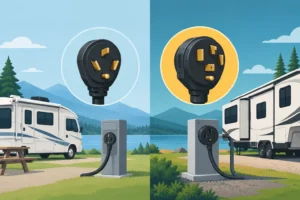
Your RV’s electrical setup matters, too. A site with 50/30/20 AMP service gives guests the flexibility to connect safely to the service their rig is designed to use. Always use properly rated cords and adapters, inspect them for damage, and avoid makeshift connections. Saving money is never worth creating an electrical safety risk.
Understand How Your Site’s Electricity Is Billed
Before making major changes, know what you are paying for. Some stays include electricity in the site rate, while longer stays may have electricity billed separately based on usage. Ask how electric service is handled for your reservation so you can budget with confidence rather than guess.
If your usage is metered, take a reading when you arrive and check it periodically. You do not need to monitor it obsessively. A quick weekly look can help you spot a sudden jump caused by unusually hot weather, a heater left running, or an appliance that needs attention.
At Big Tree RV Park, full-hookup sites and dependable electrical service are part of making extended stays simple. Pair that convenience with sensible daily habits, and you can enjoy a comfortable site without letting avoidable energy use follow you from one billing period to the next.
Build a Routine That Still Feels Like Home
The most sustainable approach is a routine your household can actually keep. Close shades before the afternoon sun hits, set the thermostat to a realistic temperature, run full laundry loads, and turn off high-draw appliances when they are not needed. These are small choices, but they are easier to maintain than drastic cutbacks.
Comfort matters on the road, particularly when your RV is your home for more than a few nights. Give your systems a little care, use the power-hungry appliances thoughtfully, and let your budget stretch further while you relax, recharge, and enjoy the stay.