
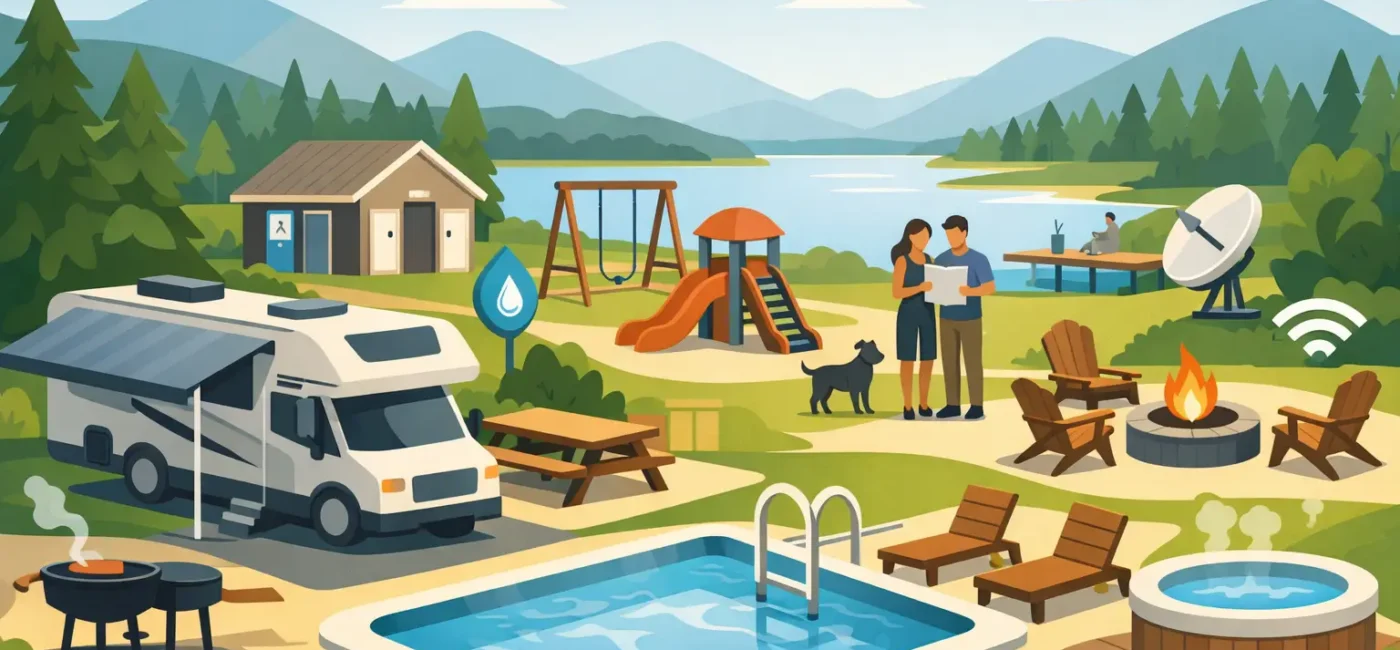
A late arrival tells you a lot about an RV park. If setup is easy, the site is level, the hookups work, and you feel comfortable stepping outside after dark, you picked well. That is really what people mean when they ask how to choose RV park amenities – not which extras look nice online, but which features make your stay simpler, safer, and more enjoyable once you pull in.
The right amenities depend on why you are traveling and how long you plan to stay. An overnight stop has one set of priorities. A weekly work stay, family trip, or long-term setup has another. The smartest way to compare parks is to separate true essentials from features that are only worth paying for if you will actually use them.
Start with the amenities that affect setup
Some amenities are not flashy, but they shape your entire experience from the first five minutes. Full hookups matter because they save time and reduce hassle, especially if you are arriving tired or staying more than a night. Reliable water, sewer, and electric service are not luxuries. They are the foundation of a comfortable RV stay.
Power deserves extra attention. If your rig needs 50 AMP service and the park mostly offers 30 AMP, that can become a real issue in hot Oklahoma weather when you want to run air conditioning without juggling appliances. A park that offers 50/30/20 AMP service gives more flexibility and makes it easier for different RV types to settle in without workarounds.
Site design matters too. Spacious sites, solid pads, and room to maneuver can make a huge difference, especially for larger rigs, tow vehicles, or guests who do not want a stressful backing-in process. Concrete pads are especially helpful because they feel cleaner, more stable, and more convenient in wet weather.
How to choose RV park amenities for your type of stay
A common mistake is choosing a park based on a long list of amenities without asking whether those amenities match the stay you are actually planning.
If you are stopping for one night, focus on easy access, dependable hookups, clean restrooms, and a quiet environment where you can rest. You may not care about a community patio or storage options if you are leaving early the next morning.
If you are staying a week or more, daily convenience starts to matter more. Laundry, clean showers, good WiFi, and a layout that feels organized can quickly move from nice-to-have to essential. When people are working remotely or staying in town for an assignment, internet quality and overall park management become part of everyday life, not just a small perk.
For long-term guests, think beyond the site itself. You are not just parking. You are choosing a place that needs to feel livable. Security, onsite management, a peaceful setting, pet-friendly policies, and access to city services all matter more when the stay stretches into months instead of days.
Safety and peace of mind should be high on the list
Many guests compare RV park amenities by looking at recreation first, but safety is usually what shapes comfort the most. A gated entrance, visible management, good lighting, and a well-kept property all help you feel more at ease. That matters for solo travelers, retirees, working professionals, and families alike.
There is also a difference between a park that simply lists security features and one that feels actively cared for. Onsite management can make a stay smoother because questions get answered quickly, maintenance issues are handled faster, and the whole property tends to feel more organized. That kind of attention helps turn a park from a stopover into a place where people can truly relax.
Quiet is part of safety for many guests too. Not everyone wants a high-energy campground atmosphere. If your goal is rest, remote work, or extended-stay living, a calm setting with clear rules may serve you better than a park that leans heavily on constant activity.
Do not overlook bathrooms, laundry, and WiFi
These three amenities often decide whether a park feels convenient or frustrating.
Even if your RV has a full bathroom, clean showers and restrooms are still valuable. They give you backup if you are trying to conserve tank space, traveling with family, or dealing with a temporary issue in your rig. Parks that keep shared facilities clean usually signal a higher standard across the property.
Laundry becomes even more important the longer you stay. Offsite laundromats cost time and add errands to your week. Onsite laundry makes life easier for travelers, workers, and long-term guests who want one less thing to coordinate.
WiFi is similar. Some travelers can get by with a hotspot for a quick overnight stop. Others need dependable internet to work, stream, check routes, manage bookings, or stay connected with family. A park that offers free WiFi can be a real advantage, but it is still worth asking whether it works well enough for your needs. Free is great. Reliable is better.
Location is an amenity too
People often treat location as separate from amenities, but it affects your stay just as much as any feature on the property. A beautiful park that leaves you far from groceries, fuel, medical care, event venues, or main roads may not be the best fit if convenience matters.
That does not always mean you want a noisy site next to heavy traffic. The sweet spot for many RV guests is a park that feels peaceful but still keeps them close to the places they need to go. If you are visiting Tulsa for events, work, relocation, or family travel, being near major attractions and transportation routes can save time every day.
This is one reason many guests prefer an in-town park with a quieter setting over a more remote option. You get easier access without giving up comfort.
Community features can add real value if you will use them
Not every amenity has to be purely practical. Shared spaces can improve a stay, especially for people who want more than a parking spot.
A resort-style patio, BBQ area, fire pit, or occasional movie night may not matter to everyone. But for long-term residents, families, and social travelers, these features help create a friendlier atmosphere. They make it easier to relax outside, meet neighbors, and enjoy the park itself instead of only using it as a base camp.
The trade-off is simple. If you mostly keep to yourself and only need a clean, efficient place to sleep, you may not want to pay more for lifestyle amenities. If you plan to settle in and spend time onsite, those extras can make a park feel much more like home.
Pet-friendly means more than allowing dogs
For many RV travelers, pet policies are a deciding factor. But a truly pet-friendly park does more than permit animals. It offers enough space, a walkable layout, and an environment where daily routines with your dog feel manageable.
If you travel with pets, ask practical questions. Is there room to walk them comfortably? Does the park feel calm enough for regular outings? Are the rules reasonable and clearly enforced? A pet-friendly label is helpful, but the overall setup matters more.
This is another case where longer stays change the answer. A pet owner passing through for one night may only need a convenient stop. A guest staying for weeks wants a place where both owner and dog can settle into a rhythm.
Compare value, not just price
When deciding how to choose RV park amenities, price should be part of the conversation, but not the whole conversation. A lower nightly rate can lose its appeal fast if you are dealing with weak utilities, cramped sites, poor maintenance, or missing basics like laundry and WiFi.
On the other hand, not every premium feature is worth paying for if you will not use it. The goal is not to find the park with the most amenities. It is to find the park with the right ones for your trip.
That is why honest self-assessment helps. Think about your rig, your travel habits, your budget, and your daily routine. If convenience, security, and clean facilities rank high for you, choose a park that does those things well before getting distracted by extras.
At Big Tree RV Park, that balance matters because guests are often looking for both comfort and practicality – a place that feels welcoming while still covering the essentials that make setup easy and extended stays manageable.
Ask what your stay will feel like on day three
Photos and amenity lists tend to sell the arrival. A better question is what the park will feel like after the novelty wears off. By day three, will the site still feel comfortable? Will the laundry, showers, WiFi, and layout support your routine? Will you feel secure coming and going? Will the location still make sense once you start running errands or commuting?
That is usually where the best choices become clear. Good RV park amenities do not just impress you at booking. They keep making life easier throughout the stay.
If you choose with that standard in mind, you are far more likely to end up somewhere that helps you rest, recharge, and enjoy the road a little more.