
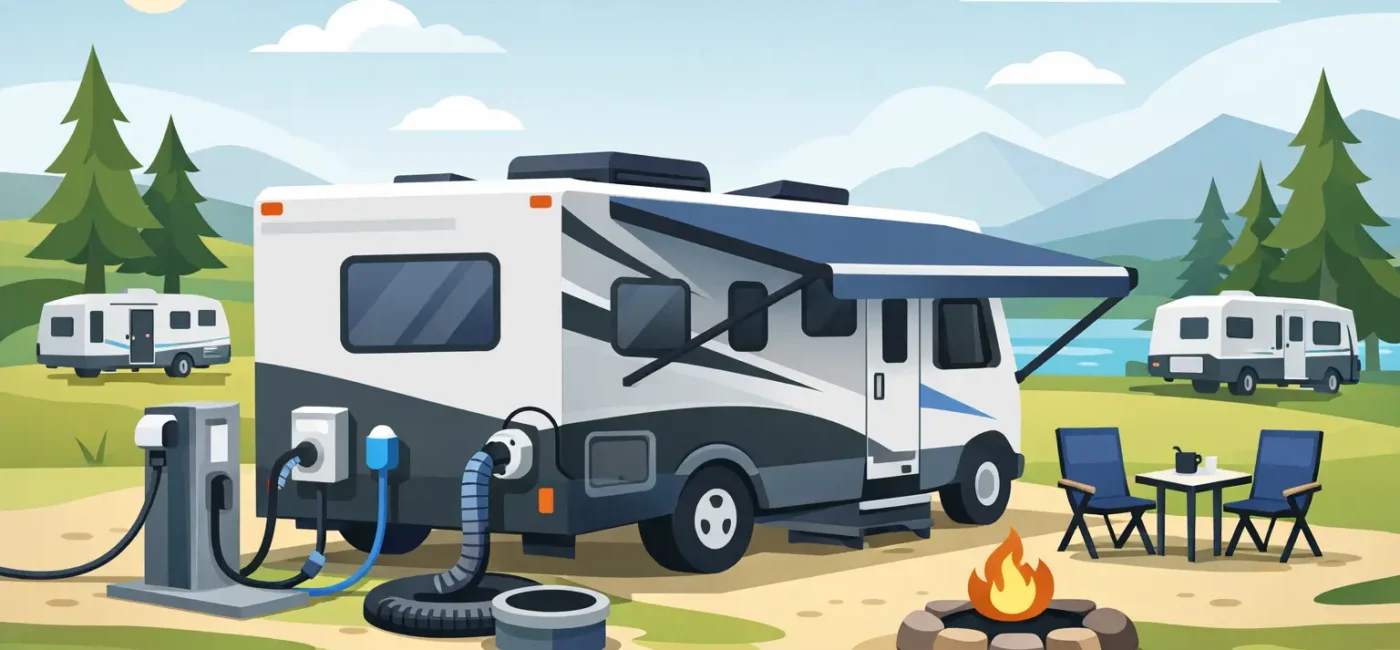
Pulling into a site after a long drive feels a lot better when setup is simple. If you’ve ever asked what does full hookup include, the short answer is this: water, sewer, and electric service at your RV site. But the details matter, especially if you want an easy overnight stop or a comfortable extended stay.
Some parks use the term loosely, and some back it up with well-maintained utilities that make day-to-day RV living feel almost like home. Knowing what you’re getting helps you avoid surprises, pack the right gear, and choose a park that matches how you travel.
What does full hookup include?
In most RV parks, full hookup means your site includes three core utility connections: fresh water, a sewer connection, and electrical service. Those three services let you run your RV more like a small home instead of treating it like a quick camping stop.
Fresh water gives you a direct source for sinks, showers, and toilets. Sewer lets you connect your black and gray tanks so wastewater can be managed properly. Electric powers your air conditioning, lights, outlets, appliances, and battery charging. When all three are available at the site, setup is faster and your stay is usually much more comfortable.
That said, full hookup does not always mean every extra amenity is included in your rate. WiFi, cable, laundry, showers, patios, or gated access may be available, but they are separate from the actual hookup definition. They add value, but they are not the basic utilities that make a site a full-hookup site.
The three services that matter most
Water connection
A full-hookup site normally gives you a dedicated water spigot at or near your pad. You connect your RV with a potable water hose and can use running water without relying only on your freshwater tank.
This is a major convenience if you’re staying more than a night or two. You can wash dishes, shower, and use the bathroom without constantly checking tank levels. It also saves time because you do not have to refill from a central station.
Water pressure can vary from park to park, so many experienced RVers use a pressure regulator. That’s not because something is wrong with the site. It’s simply a smart way to protect your RV plumbing.
Sewer connection
The sewer hookup is what separates a more comfortable stay from a more hands-on one. Instead of driving to a dump station, you can connect your sewer hose directly to the park’s sewer inlet.
That makes a big difference for families, long-term guests, and anyone who wants less hassle during their stay. You can manage gray and black tanks more easily, although proper usage still matters. Even with full hookups, you should use your sewer connection the right way so solids do not build up in the black tank.
If you’re new to RV travel, this is one area where setup details count. You’ll want the right sewer hose, fittings if needed, and a secure connection. A well-designed site makes that process straightforward.
Electrical service
Electric service is the third piece of the full-hookup setup, and it’s often the one people need to look at most closely. Not all electric service is the same. A park may offer 30-amp, 50-amp, or sometimes 20-amp outlets at the pedestal.
If you have a larger rig or plan to run multiple appliances, air conditioning, and electronics at the same time, 50-amp service is a strong advantage. Smaller campers may do just fine on 30-amp service. Some parks provide multiple options at the same site, which gives guests more flexibility.
Before booking, it helps to confirm that the site supports your RV’s plug type and power needs. A full-hookup site with the wrong electrical setup is still a full-hookup site, but it may not be the right fit for your rig.
What full hookup usually does not include
This is where some confusion comes in. People often hear full hookup and assume it covers every park amenity. Usually, it does not.
Full hookup refers to utility access at the site. It does not automatically include free laundry, bathhouses, high-speed WiFi, cable TV, propane service, picnic furniture, storage, or premium site upgrades. Some parks include many of those extras in the nightly rate, while others charge separately or offer them only in certain site categories.
It also does not guarantee site size, shade, privacy, concrete pads, pull-through access, or resort-style common areas. Those features can make a huge difference in your experience, especially during longer stays, but they are not part of the basic full-hookup definition.
That’s why it’s smart to look beyond the phrase itself. Two parks may both advertise full hookups, but one may deliver a much easier, cleaner, and more relaxing stay.
Why full hookups make travel easier
For many RV guests, full hookups are less about luxury and more about peace of mind. When you arrive tired, maybe after weather, traffic, or a full day on the road, having everything ready at your site keeps the evening simple.
You can plug in, connect water, hook up sewer, and settle down without planning your stay around tank limits or generator use. If you’re working remotely, traveling with kids, bringing pets, or staying for several weeks, that convenience matters even more.
Extended-stay guests often notice the difference first. With full hookups, normal daily routines feel easier to maintain. Cooking, cleaning, showering, laundry planning, and climate control become less of a project and more of a routine. That’s a big part of what turns an RV park from a stopover into a place where you can actually relax.
What to ask before you book a full-hookup site
Even when a park advertises full hookups, a few quick questions can save you trouble later. Ask what electric service is available at the site and whether your rig needs an adapter. Confirm that sewer and water are located directly on the site, not shared or positioned awkwardly for your layout.
You may also want to ask about site surface and spacing. A level concrete pad can make setup much easier than a rough or uneven surface, especially for larger RVs. If you’re staying awhile, details like reliable WiFi, clean showers, laundry access, quiet hours, and secure entry can matter almost as much as the hookups themselves.
This is especially true if you’re comparing parks for a monthly stay. Full hookups cover the basics, but comfort comes from how well the whole property is managed.
What does full hookup include for long-term RV stays?
If you’re planning to stay a few weeks or a few months, what does full hookup include becomes a more practical question. At that point, you’re not just asking whether the utilities exist. You’re asking whether they support everyday living.
A strong long-term setup means dependable utility connections, enough electrical capacity for the season, clean infrastructure, and a site that is easy to access and maintain. It also helps when the park is organized, quiet, and responsive if issues come up.
That’s why many long-term guests look for more than just hookups. They want secure access, on-site management, laundry, clean bath facilities, and an atmosphere that feels settled rather than chaotic. At a well-kept property like Big Tree RV Park, those details help full hookups do what they’re supposed to do: make life easier from day one.
The best way to think about full hookups
The simplest way to think about it is this: full hookups give your RV the utility connections it needs to function comfortably on site. Water, sewer, and electric are the essentials. Everything else builds on that foundation.
If you only need a basic overnight stop, almost any properly maintained full-hookup site may do the job. If you want a place to unwind, work, or stay longer, then the quality of the park matters just as much as the hookups themselves.
When you’re comparing options, look for a park that makes arrival easy, utilities dependable, and daily living comfortable. That’s where full hookup stops being just a line in a listing and starts feeling like a stay you can actually enjoy.